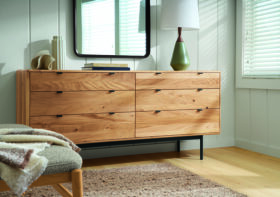
Our Approach to Wood Sourcing


Sustainability has been a core value since our founding in 1980, and it continues to guide how we design and make our furniture. In 2025, we achieved one of our biggest goals—sustainably sourcing 100% of the wood used in our furniture from responsibly managed North American forests and certified, recycled or reclaimed sources.
“Wood is our most used material. Sourcing it responsibly just makes sense,” shares Emily McGarvey, Director of Sustainability.
The Importance of Sustainable Forestry
Using wood isn’t just about cutting down trees. Global deforestation remains a recognized issue, and international trade agriculture products, including wood, can contribute to forest loss when not properly regulated. Finding wood that avoids these problems and stays true to our quality and sustainability principles is top of mind.

Sourcing With Integrity
Our manufacturing partners go through a formal verification process to meet our stringent sustainable wood sourcing policy. And ongoing conversations help us identify any issues that may change over time.
We are unique in the furniture industry with 90% of our wood harvested in the U.S. and Canada, which are considered to have sustainable forestry practices, low risk for corruption and strong governance locally and nationally. By sourcing largely within North America, we also cut down on transportation emissions.
Woods sourced outside the U.S. and Canada require third-party certification to meet our sustainable wood sourcing policy. These measures ensure the wood is harvested in a way that protects the environment and is fair to workers.
The types of wood we use are as important as their origins. We lean toward hardwoods like maple, oak, ash and walnut. These materials are both beautiful and durable when used as solid planks or for high-quality veneer.

Exploring Alternative Wood Sources
In addition to traditional sources of wood, we support thriving forests through innovation and philanthropy. Our Urban Wood Project uses reclaimed wood from across the U.S., which decreases our use of forested lumber. The reclaimed wood comes from buildings slated for demolition and trees removed for maintenance. In 2025, we kept the equivalent of 365 trees out of the waste stream; our goal is to divert the equivalent of 1,000 trees annually by the end of 2030. We also provide philanthropic support to nonprofits, research, internships and scholarships focused on forestry.

Sourcing (and Building) Close to Home
Emily notes that we lead the industry where imported products are often the norm, U.S. craftspeople build more than 90% of our furniture. This boosts local economies, reduces our environmental impact and ensures our furniture is crafted with care.
Our achievement of 100% sustainably sourced wood reflects our long-term dedication to quality and sustainability. We believe we can make a difference, one tree at a time.